Skipping Parking Suspensions in BR4: Fines & How to Apply
Posted on 12/07/2026
Skipping Parking Suspensions in BR4: Fines & How to Apply
If you're planning a move, delivery, or any job that depends on safe kerbside access, skipping parking suspensions in BR4 can turn a straightforward day into a very expensive one. A missed notice, a poorly timed van, or a quick assumption that "it'll be fine for an hour" is often all it takes to trigger a penalty, delay loading, or force a last-minute rethink. In a busy area like BR4, where street space is tight and every bay seems to be doing two jobs at once, knowing how parking suspensions work matters far more than people expect.
This guide explains what parking suspensions are, why fines happen, how to apply properly, and how to avoid the small mistakes that cause the biggest headaches. Along the way, we'll also cover planning tips for moving day, practical risk reduction, and a few local observations that can save you time and stress. Let's face it: parking is rarely glamorous, but it can make or break the whole operation.
Why Skipping Parking Suspensions in BR4: Fines & How to Apply Matters
A parking suspension is not just a sign on a post. It is a temporary restriction that removes normal parking rights from a bay or section of road for a specific reason, usually to keep space clear for works, access, removals, skips, or other operational needs. In BR4, where residential roads, station approaches, and busier commercial stretches can all get crowded at peak times, ignoring that restriction can lead to enforcement action and a very awkward day.
The practical reason this matters is simple: most people do not set out to "skip" a suspension deliberately. They miss the notice, misunderstand the dates, or assume the sign applies only to one section of the street. Then the fine arrives, the vehicle has to move, and the job runs late. If you are organising a home move, there's enough to juggle already. Parking should not be the thing that tips everything over.
For anyone handling removals, deliveries, or heavy item transport, parking access is part of the job plan, not an afterthought. That is why local planning advice often sits alongside topics like Bromley Council permits for West Wickham removals explained and access and parking tips for West Wickham Common moves. The pattern is the same: if the vehicle cannot legally stop where you need it, the rest of the plan gets harder, faster.
Expert summary: In BR4, parking suspensions are less about bureaucracy and more about keeping a moving day on track. Apply early, read the sign carefully, and always assume the suspension affects the exact space shown unless the notice says otherwise.
How Skipping Parking Suspensions in BR4: Fines & How to Apply Works
Parking suspension rules are usually enforced through clearly displayed notices. These signs indicate the suspended location, the dates and times, and often the reason for the restriction. If a vehicle parks in a suspended bay during the active period, enforcement can follow. The exact outcome depends on the circumstances, but the core risk is the same: the vehicle is not allowed to remain there.
When people ask how the application process works, what they usually mean is: how do I secure a suspension for my move or job so the space is available when needed? In principle, the process is straightforward. You request the suspension in advance, provide the details of the vehicle or job, confirm the location and times, and wait for approval. In practice, the details matter a lot. A missing street number, wrong date, or poorly planned time window can make an otherwise sensible request unusable.
There are a few moving parts to understand:
- Notice period: Applications often need to be made ahead of time, so leaving it until the night before is risky.
- Location specificity: You normally need to identify the exact road, bay, or stretch of kerb space.
- Duration: The suspension should cover the realistic loading or unloading window, plus a small buffer.
- Vehicle details: Larger vans or multiple vehicles may need different wording or separate consideration.
- On-street signs: Even if you have applied, the actual suspension usually depends on visible signage being in place and correct.
It helps to think of the application as a coordination tool rather than a magic pass. A suspension request improves your chances of getting legal access, but it does not replace the need to check the street on the day. Roadworks, weather, or a change in local conditions can still alter the picture. You may notice this especially around tighter streets near transport routes, where space disappears quickly on weekday mornings.
If your move needs careful timing, a broader plan can help too. Articles such as the essential guide to a calm house move and what to expect from urgent same-day removals in West Wickham are useful because they show how parking, loading order, and time pressure all interact in real life.
Key Benefits and Practical Advantages
Getting parking sorted properly can feel like a small administrative win, but the payoff is bigger than people think. Here's what good suspension planning gives you in practice.
- Less risk of fines: The obvious one. A legal loading space reduces avoidable penalties.
- Smoother loading: The team can work closer to the property, which saves time and energy.
- Lower damage risk: Fewer long carries means fewer chances to bump furniture, chip walls, or strain backs.
- Better timing: A short loading window is easier to hit when the van is actually near the door.
- Less stress for everyone: The driver, movers, and customer all have a clearer plan.
That last point is not fluff. When the van is parked legally and the route is clear, the whole job feels calmer. Boxes move in a steady rhythm, not in bursts of panic. People communicate better. Even the sound of furniture being carried up a path feels more controlled. It sounds simple, but good access really does change the atmosphere.
There is also a commercial angle for removal jobs. Fewer delays mean a better use of labour time, and fewer parking surprises mean fewer hidden costs bleeding into the final bill. If you're comparing job estimates, it's worth reading avoid hidden fees when decoding West Wickham removal quotes alongside parking guidance, because access issues and quote surprises often show up in the same conversation.
Who This Is For and When It Makes Sense
Parking suspensions are not just for big construction projects. They can be genuinely useful for a wide range of everyday situations, especially in BR4 where many streets are narrow and parking pressure is constant.
You will likely need to think about a suspension if you are:
- moving house or flat
- bringing in large furniture or appliances
- managing a same-day move with a tight arrival window
- coordinating office equipment or commercial stock
- transporting delicate or oversized items
- working from a property with limited off-street access
It makes sense any time the vehicle needs to be close to the property and you cannot rely on finding a free space on the day. In a quiet cul-de-sac, you might get lucky. On a busier residential road near a station or high street, luck is not a strategy.
There's a small but important judgement call here: if your job involves one light van and a couple of easy-to-carry boxes, the hassle of a suspension may be more than you need. But once you are dealing with bulky furniture, awkward stair access, or a time-critical move, having the space protected is usually worth the effort.
For bigger or more awkward items, it also helps to read practical guidance like moving large items down West Wickham terraces safely and streamlined techniques for moving your bed and mattress. Parking and handling go hand in hand. One without the other, and things get messy.
Step-by-Step Guidance
Here is a practical way to approach a parking suspension request without overcomplicating it.
- Check the exact location. Confirm the street name, nearest property number, bay markings, and whether the space is single yellow, pay-and-display, resident bay, or another type of restriction.
- Work out the real loading window. Be honest about timing. A one-bedroom flat on the second floor with one mover is not the same as a ground-floor load with a team of three.
- Identify the vehicle involved. A van, removal truck, or multiple cars may have different space needs. Don't guess.
- Allow buffer time. Build in room for delays such as traffic, lift access, awkward items, or a late handover of keys.
- Prepare the application details. You will usually need location, dates, times, reason, and vehicle information. Keep them consistent across the request.
- Submit early. The more notice you give, the fewer last-minute complications you are likely to face.
- Confirm signage arrangements. Make sure the suspension will actually be displayed where the vehicle needs to park.
- Check on the day. Even approved arrangements should be verified in person. Signs, weather, and street conditions can change.
A useful habit is to treat the application like part of the move checklist, not a separate admin task. If you are already coordinating boxes, keys, and furniture protection, it is easier to fit parking planning into the same flow. That is exactly why practical preparation articles such as efficient packing tips and decluttering before moving house can be unexpectedly helpful. Less stuff to move means less time spent fighting for the kerb.
One more real-world note: if your move is around a busy local route or near a station, schedule matters a great deal. Early mornings can be calmer for loading, but not always. It depends on school runs, commuters, and local traffic patterns. There's no perfect formula, sadly. But a well-placed time window comes close.
Expert Tips for Better Results
After handling enough moving jobs, a few patterns show up again and again. The people who get parking right tend to do the boring bits well. The people who struggle usually try to improvise. Not exactly a shock, but there it is.
- Use the smallest practical parking footprint. If a shorter vehicle or different loading method works, consider it.
- Keep documentation handy. Proof of approval, reference numbers, and contact details should be easy to find.
- Walk the route before moving day. A 30-second look at the bay can reveal narrow access, awkward gradients, or hidden restrictions.
- Coordinate with neighbours where possible. A polite heads-up can prevent misunderstandings about temporary space use.
- Protect the property approach. Floor runners, blankets, and corner protection reduce wear when items are close to the entrance.
There's also a human side to it. If the move is emotional or rushed, people forget simple things. Keys are in one coat pocket, phone battery is low, someone is looking for the kettle, and nobody is quite sure who has the permit printout. A tiny bit of preparation avoids that comedy of errors. We've all seen it happen.
If lifting and carrying are part of the job, don't ignore technique either. You may find solo heavy lifting tips and techniques and kinetic lifting for improved performance useful as companion reading, especially if the job involves tight access and repeated trips. Parking is one problem; back strain is another, and it arrives with very little sense of humour.
Common Mistakes to Avoid
Most parking suspension problems come from a handful of avoidable mistakes. Once you know them, they're easier to spot.
- Leaving the request too late. This is the classic one. Late applications can mean no approved space, or approval that arrives too late to be useful.
- Assuming one sign covers a whole street. It may not. Read the exact location carefully.
- Ignoring the end time. Parking after the suspension expires sounds harmless, but it can still cause trouble if the space is being restored for other users.
- Using vague location details. "Near the house" is not enough.
- Forgetting about other road users. If the bay is narrow or shared, make sure your vehicle does not block driveways or turning space.
- Not checking for changes on the day. Temporary works, weather, or street cleansing can alter the picture.
Another common issue is overconfidence. Someone says, "The van will only be there ten minutes," and everyone nods as if that settles it. Then a wardrobe won't fit round the corner, a mattress needs a second attempt, and suddenly the ten minutes becomes forty. That's how small misses become expensive ones.
If your job involves special items, parking mistakes become even more annoying. Delays can make fragile loads sit around longer than planned. That is why pages like packing fragile antiques in West Wickham to prevent damage and expert handling of pianos explained matter in the same planning conversation. Access and item safety are really two sides of the same coin.
Tools, Resources and Recommendations
You do not need fancy software to manage a parking suspension, but a few simple tools can make the process much easier.
- Phone calendar reminders: Useful for application deadlines, approval checks, and move-day timings.
- Notes app: Keep the location details, bay references, and any contact names in one place.
- Printed backup: Still worth having. Batteries die at the worst possible moment.
- Measuring tape: Helpful if you need to check vehicle fit or loading clearance.
- Camera or phone photos: A quick image of the bay signage and street layout can help avoid confusion later.
For a broader move plan, it is also useful to line up services and preparation work in advance. Depending on your situation, you might benefit from reading about removals in West Wickham, man and van support in West Wickham, or packing and boxes in West Wickham. These are not parking resources themselves, but they do fit the same planning puzzle.
If you are moving in stages, storage can also reduce pressure on the day. Fewer items in the van means faster loading and unloading, which in turn makes parking windows much easier to manage. For that reason, some people look at storage in West Wickham before deciding how much to move in one go.
Law, Compliance, Standards, or Best Practice
Parking suspensions sit inside a broader framework of local traffic management and road use. The exact rules can vary by council, road type, and restriction zone, so it is wise to treat local guidance seriously and not assume one street behaves like another. In practical terms, compliance means understanding the sign, respecting the suspended period, and not parking in a space that is clearly out of bounds.
Good practice is a mix of common sense and careful checking:
- read the suspension notice fully
- check dates and times, not just the location
- make sure the van or vehicle fits the space safely
- avoid blocking access to driveways or junctions
- keep approval details available in case of dispute or confusion
Where moving-day access is involved, safety and insurance also matter. You want a setup that is lawful, practical, and defensible if anything goes wrong. That is why it is sensible to understand the company's wider working standards too, such as the health and safety policy and insurance and safety information. Parking by itself won't protect you from every risk, but a well-managed job reduces a lot of avoidable exposure.
For anyone comparing operators, transparency is a good sign. Clear booking terms, honest pricing, and consistent communication usually indicate a more organised setup. You can see that style of approach reflected across pages like pricing and quotes and terms and conditions, which help set expectations before the move starts.
Options, Methods, or Comparison Table
There are several ways to handle parking for a BR4 move, and the best choice depends on timing, load size, and how busy the street is. Here's a simple comparison.
| Approach | Best for | Pros | Watch-outs |
|---|---|---|---|
| Apply for a suspension | Busy streets, larger vans, time-sensitive moves | Closest legal access, less carrying distance, fewer surprises | Needs planning and lead time |
| Use existing legal parking | Quiet streets or flexible timings | No application process, simple if space is available | Not reliable on busy roads, space may disappear |
| Plan for short-carry access | Light loads, smaller jobs, easier properties | May avoid extra admin | More walking, more lifting, slower loading |
| Split the move into stages | Large homes, awkward access, limited space | Reduces pressure on one parking window | Can take longer overall and needs coordination |
If you're unsure which route is best, ask yourself one practical question: what happens if the closest legal space is already taken? If the answer is "we'd be stuck," then a suspension or alternative access plan probably belongs in the schedule.
Case Study or Real-World Example
Here's a very ordinary example, which is exactly why it's useful. A family moving from a terraced house in BR4 planned to use the bay directly outside the property. On paper, it looked easy. The van was booked, the boxes were packed, and everyone assumed the road would be manageable early on a weekday morning.
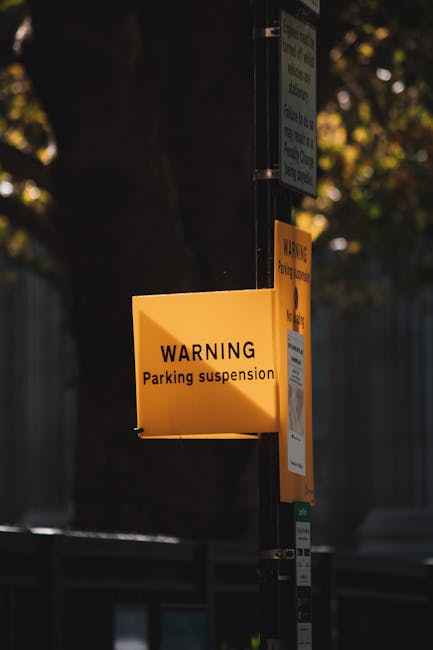
Then the warning notice appeared on the street a few days before the move: a temporary parking suspension for nearby works. The family had not checked it properly, and the van would have been left nowhere sensible to stop. The result? A rushed rethink, a two-street walk with furniture, and a much less pleasant start to the day.
The solution was not dramatic. They reworked the schedule, arranged a legal alternative loading spot, shortened the loading window, and kept the heaviest items for first. It still took effort, but the move stayed on track. The key lesson was simple: the parking issue was never the main problem. The main problem was the assumption that space would just be there.
That kind of small failure happens all the time. Not because people are careless, but because moving is already noisy in the mind. Doors open, labels fly, someone is hunting for the tape, the kettle needs unplugging, and parking gets pushed to the back. A bit of structure changes everything.
Practical Checklist
Use this checklist before move day or before applying for a suspension. Short, simple, and very usable.
- Confirm the exact street and bay location
- Check whether the space is already under another restriction
- Measure the vehicle and compare it to available kerb space
- Decide the loading window with a buffer
- Prepare vehicle registration and job details
- Submit the application early enough to allow processing
- Review the approval carefully for dates, times, and location
- Print or save the confirmation
- Walk the route on the day if possible
- Make sure the team knows where to park and when to move in
- Keep a backup plan in case the space is unavailable
- Check for any fresh notices on the street before unloading
And one more tiny but useful habit: keep one person responsible for the parking side of the job. Too many people checking, and somehow nobody is checking. Funny how that happens.
Conclusion
Skipping parking suspensions in BR4 is rarely worth the gamble. A missed suspension can lead to fines, delays, extra carrying, and a move-day mood you really did not need. The better approach is straightforward: plan early, read the location carefully, allow for real-world timing, and keep a backup option ready if the street changes under your feet.
Handled properly, parking becomes one less thing to worry about. That means calmer loading, safer lifting, fewer surprises, and a better start to the rest of the move. Not exciting, perhaps. But deeply helpful.
If you are preparing a move, a delivery, or any job where access is tight, sorting the parking question early is one of the smartest decisions you can make. It saves energy, protects the job, and gives everyone a little more breathing room. And honestly, in BR4, a bit of breathing room can feel like gold.
Get a free quote today and see how much you can save.